


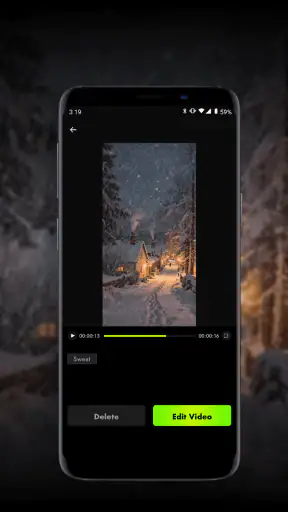
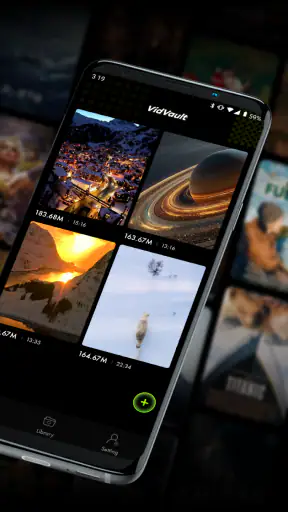
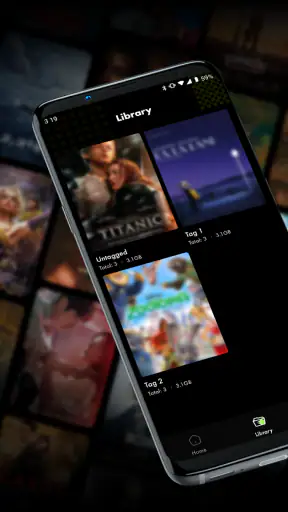
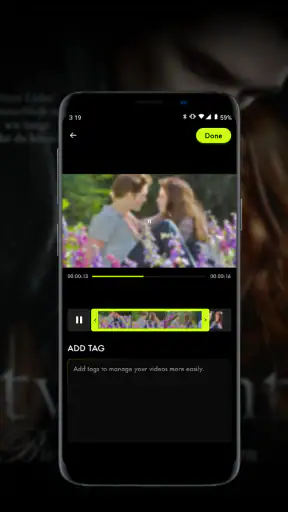
VidVault is the kind of video utility I would reach for when my phone’s camera roll starts becoming difficult to manage. It sits in the video players and editors category, but the experience feels more practical than ambitious: the focus is on handling video rather than turning every clip into a polished production. That distinction matters. If you want a simple place to work with personal recordings, it may fit your routine; if you expect a full studio with advanced effects, you should approach it more cautiously.
I spent time looking at it from the perspective of ordinary phone use: recording a short clip, trying to prepare it for sharing, and dealing with the interruptions that can make mobile media work frustrating. The app’s store summary is brief, but the real question is how comfortable it feels when videos are large, connections are inconsistent, and storage is limited. My overall impression is that VidVault is most interesting as a straightforward video-management companion, not as a replacement for a professional editor.
How VidVault fits into everyday video work
The first thing I noticed is that the app’s appeal depends on what you mean by “edit.” For quick personal tasks, a focused tool can be more pleasant than a large editor filled with timelines, templates, music libraries, and promotional panels. VidVault, developed by gedsvv 1245, presents itself with a compact identity and a free price, which makes it easy to consider for casual use without committing money first.
Its audience is likely to include people who record family moments, short social clips, travel footage, or demonstrations for work and then need to organize or adjust those files. I can also see it helping someone who regularly receives videos through messaging apps and wants a more deliberate way to handle them than opening each file from a chat thread. The useful question is not whether it can replace every editing application, but whether it reduces friction in these small, repeated jobs.
The app has an Everyone content rating, and it runs on Android 8.0 or later. That broad compatibility is helpful for households where not everyone has a recent phone. At the same time, an older operating system does not automatically mean an identical experience across devices. Video handling can feel very different on a newer phone with generous storage than on an older handset that is already close to full.
VidVault’s current version is 1.3.8, and its public reception is encouraging: it holds a 4.5 average from around 9,000 ratings and has passed one million installs. Those figures suggest that the app has found a real audience, although I would still judge it against your own workflow rather than treating popularity as proof that it will suit every phone.
Where connectivity becomes part of the experience
Video apps often appear local because the files are on the phone, but connectivity can quietly shape the experience. The moment I want to share a finished clip, bring in a file from a cloud service, or move a large recording to another device, the network becomes part of the process. VidVault is therefore easiest to evaluate in two separate stages: preparing a video and doing something with it afterward.
When I am working with a clip already available on the device, a weak signal should not be the first thing on my mind. The more important limits are storage, processing time, and the phone’s ability to handle the file comfortably. Once the task involves sending or retrieving video, however, a poor connection can turn a quick job into a waiting exercise. Large files are especially unforgiving because an interruption is more noticeable than it would be with a photograph.
This is one reason I would avoid beginning an important video handoff while moving between networks. A better habit is to prepare the clip first, check that the result is actually the version I want, and only then start sharing it when the connection is stable. That simple separation makes troubleshooting easier because I know whether a problem came from the video task or from the transfer.
People who mainly edit for personal storage may barely notice connectivity during their normal routine. Users who publish frequently, send clips to clients, or move media between several services will feel it much more. For them, VidVault should be considered one part of a wider workflow rather than the entire workflow.
Using it on the move
Mobile video work is rarely done in ideal conditions. I might be standing in a train station with a few minutes to prepare a clip, sitting in a café with a crowded network, or trying to clear space before recording an event. In those situations, the best app is not necessarily the one with the longest feature list. It is the one that lets me make a decision quickly and avoids unnecessary steps.
VidVault makes sense for this kind of short session when the video is already on the phone and the goal is modest. I would use it to clean up a recording before sending it, separate useful material from clutter, or prepare a clip while I still remember why I recorded it. A small, repeatable workflow is more realistic on a phone than attempting a complex project while standing outdoors.
There is also a practical battery trade-off. Video files require more work than ordinary documents, and repeated previews or exports can be tiring for a phone, especially when the battery is already low. I would avoid opening several demanding tasks at once. Instead, I would choose the source clip, make the necessary adjustment, review the result once, and close anything else that is consuming resources.
A useful mobile habit is to give finished files a clear purpose immediately. A clip intended for a group chat does not need the same treatment as a clip being kept as a personal record. If I create several nearly identical copies, I make later management harder and use more storage. VidVault is more valuable when it supports a tidy decision-making process rather than becoming another place where unfinished videos accumulate.
A realistic everyday scenario
Imagine recording a child’s school performance on a phone. The original video is long, the surroundings are noisy, and the family group only needs a short section. I would open VidVault soon after the event, identify the relevant moment, prepare a shareable version, and keep the original until I had checked that the new file was correct. The important part is not speed alone; it is avoiding the common mistake of deleting the source before confirming the result.
If the venue’s connection is unreliable, I would postpone the sharing step and concentrate on preparing the file. Later, on a dependable network, I could send it without trying to diagnose an editing problem and a connectivity problem at the same time. This kind of two-stage workflow is especially useful for large recordings, where a failed transfer can be more annoying than the original editing task.
For a different example, consider a small shop owner recording a product demonstration. VidVault could be useful for turning a raw phone recording into something easier to review or pass to a colleague. But if that person needs brand overlays, carefully timed captions, multi-track audio, or a repeatable campaign template, a dedicated professional editor would probably be a better choice. The app’s value is strongest when the task is clear and limited.
What happens when a task fails
Failure and recovery are where a video app proves whether it belongs in a real routine. A video may not open as expected, an operation may take longer than planned, or a transfer may stop because the network changes. I prefer workflows that make it obvious which file is original and which is the working copy. With any mobile editor, that discipline is more important than it sounds.
My recommendation is to avoid destructive decisions until the final result has been reviewed. Keep the source available, use descriptive names when the phone allows it, and do not assume that a newly created file is correct simply because the operation appeared to finish. Open the output, check the beginning and end, and confirm that the sound and picture behave as expected before removing anything.
Recovery also means knowing when to stop retrying. If a network handoff fails repeatedly, I would not keep pressing the same action while the signal is unstable. I would save the prepared video, move to a stronger connection, and try again. If the phone is low on space, I would first remove clearly disposable duplicates rather than repeatedly launching another large operation.
One limitation of a compact app is that it may not provide the extensive project-management safety net found in larger desktop tools. That is not necessarily a flaw for a short clip, but it becomes important when the material is irreplaceable. For weddings, business archives, or journalism, I would maintain a separate backup and treat VidVault as a convenient working tool, not the only copy of the footage.
Being careful with mobile data and storage
Video is expensive in two different ways: it occupies local storage and can consume a great deal of mobile data when moved across a network. Even when the editing itself happens on the device, the next step may involve uploading or sending a sizable file. I would therefore make Wi-Fi the default for large transfers and reserve mobile data for short clips or genuinely urgent situations.
Before starting a video-heavy session, I would check available storage and leave room for temporary working files. A phone can appear to have enough space for the original recording but still struggle when a second copy is created during processing. This is a particularly important consideration on older or budget devices, where storage tends to fill quickly with camera footage, messaging attachments, and downloaded media.
A simple sorting routine helps. I would separate recordings into three groups: material worth keeping, clips that need editing, and obvious duplicates or failed takes. Working through those groups before an important trip or event prevents the camera from becoming unusable at the worst moment. VidVault is more effective when paired with that habit than when used as a last-minute rescue tool.
There is also a quality-versus-size decision. A clip intended for a private message may not need the same file size as an archival copy. On the other hand, reducing a video too aggressively can make text, faces, or movement look poor. I would keep a higher-quality original when the footage matters and create a lighter sharing copy only when the destination makes that sensible.
Who should choose it, and who should look elsewhere
I would recommend VidVault to Android users who want a free, approachable way to manage everyday video tasks without immediately entering the complexity of a full production suite. It is particularly suitable for short personal projects, quick preparation before sharing, and people who prefer a focused tool over an editor crowded with creative extras.
The app is also a reasonable candidate for families with mixed-age devices because its minimum requirement is Android 8.0 and its age rating is Everyone. Still, I would test it on the actual phone that will handle the videos. Compatibility on paper does not guarantee that long or high-quality recordings will feel equally comfortable on every device.
I would skip it as a primary choice if your work depends on advanced color correction, layered timelines, detailed audio mixing, motion graphics, or highly repeatable branded templates. In those cases, a more specialized editor is worth the additional complexity. I would also choose a broader media-management solution if your main need is synchronizing a large library across devices and services rather than preparing individual clips.
Compared with the usual all-in-one mobile editors, VidVault’s likely advantage is restraint. A simpler environment can make a quick job less intimidating and reduce the temptation to over-edit a personal recording. The trade-off is that users who enjoy extensive creative controls may find the experience less satisfying than a feature-heavy alternative. That is not a contradiction; it is the central choice between convenience and depth.
My connectivity verdict
After looking at VidVault through the realities of mobile networks, I see it as a useful local-first style of companion for people whose immediate video work happens on the phone, while the sharing and backup stages depend on whatever connection is available. I would not plan an urgent, large transfer around an unstable signal, and I would not treat any video app as a substitute for keeping important originals safe.
The best results come from separating preparation from distribution: select and refine the clip, verify the output, then send or store it when the network is dependable. That approach also makes failures easier to recover from and helps control data use. It is a small change, but it turns a vague “video problem” into two manageable tasks.
My recommendation is to try VidVault when your priority is uncomplicated video handling rather than professional production. Its free access, broad age rating, established install base, and strong average rating make it easy to test, while its real suitability will depend on the size of your files, the strength of your phone, and how often your workflow leaves the device. For quick personal clips and practical mobile organization, I can see it earning a place. For demanding projects or connection-heavy publishing, I would pair it with stronger backup and transfer tools, or choose a more advanced editor from the start.
In short, VidVault is most convincing when I use it deliberately: one clip, one clear purpose, one careful review before sharing. That keeps the experience manageable on a phone and avoids expecting a compact video utility to solve every problem created by large files, limited storage, and unreliable connectivity.


